Professional Heat Pump Repair in Salt Lake City, UT
Heat pump repair in Salt Lake City — defrost problems, icing, short cycling, and heating or cooling faults. Learn the signs and what a techn
Learn more →
Replacing a heat pump is a different decision from installing one for the first time. The house already has a system, a set of ducts or wall units, and a history: how often it broke down, how it handled the coldest weeks, and how the energy bills looked. Replacement is the moment to fix the problems the old system had — a unit that iced up every winter, a reversing valve that stuck, rooms the old heads never reached — rather than repeating them with a new box in the same place.
The reversing valve is the part that decides many heat pump replacements. It is the valve that switches the system between heating and cooling, and when it sticks, the system heats when it should cool or fails to switch at all. A compressor that has failed, refrigerant that keeps leaking from the coil or line set, and a defrost system that no longer clears ice from the outdoor coil all point the same way.
Winter history matters more for a heat pump than for any other system. A unit that iced up every January, needed auxiliary heat for weeks at a time, or could not hold temperature on the coldest nights was undersized or worn out for this climate. Age, repair frequency and that winter record are the factors the replacement pages use.
The old heat pump's winter record is the sizing evidence. A unit that iced up every January, relied on auxiliary heat for weeks, or could not hold temperature on the coldest nights was undersized for the home's heating load — or its capacity had fallen as the coil fouled and refrigerant leaked. The replacement is sized from the home's current heating and cooling loads, not from the old unit's rating, and the new unit's capacity at cold temperatures is checked against the coldest weeks, not its mild-weather figure.
The household's heating pattern matters too. A home that now runs the heat pump harder, or that added a room the old unit never reached, needs a different size or a different configuration — an added indoor head, or a switch between ducted and ductless. The old unit's rating is treated as a clue to what went wrong rather than as the size to repeat.
Replacement is the chance to change configuration, not just the box. A ducted system whose ducts leak, are undersized or run through an unconditioned attic may be better replaced with ductless heads, each serving its own zone. A ductless system whose heads never reached the far rooms may be better served by adding a head, moving a head, or switching to ducted.
The existing line set and wiring are checked before reuse: a lineset that is the wrong diameter, contaminated or damaged has to go, and the outdoor unit's placement is reconsidered — a spot that collected snowdrifts or sat in a wind tunnel caused some of the old unit's icing trouble. The new unit is sized from the home's current heating and cooling loads, not from the old unit's rating.
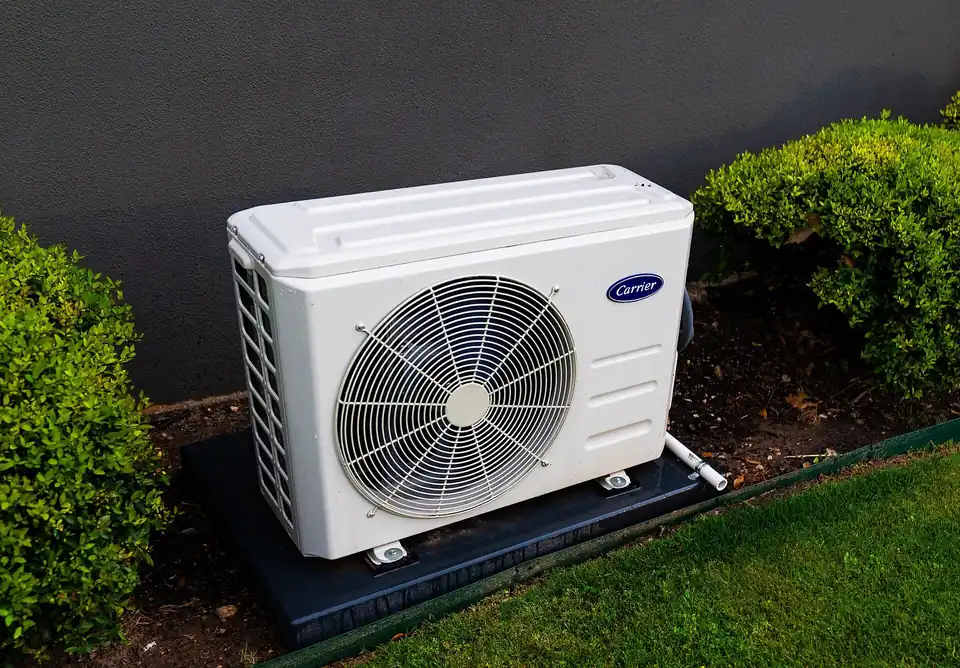
A heat pump swap starts with the old system: refrigerant recovered, power disconnected, the outdoor unit lifted off its pad or bracket, and the indoor air handler or wall heads removed. The line set and wiring are inspected before reuse — a lineset that is the wrong diameter, contaminated or damaged has to go — and the outdoor unit's placement is reconsidered, because a spot that collected snowdrifts or sat in a wind tunnel caused some of the old unit's icing trouble.
The new unit is set in place, connected to the line set, wiring and condensate drains, evacuated and charged, and run through a full cycle in both modes: heating, with the reversing valve and defrost checked, and cooling, with refrigerant pressures and temperatures measured. The thermostat is tested through both modes before the job is finished.
The main factors are the configuration and how much of the old installation can be reused. A like-for-like ducted swap reuses the ducts, line set and wiring; a change to ductless, a new line set, or a move of the outdoor unit does not. A dual-fuel setup adds a furnace connection and switchover controls.
Condition matters too. Ducts that need sealing or repair, an outdoor pad that has settled, or a condensate route that needs rerouting all add work. No prices are published on this website; ask the service provider for pricing details before authorising any work.

Service providers may work on major equipment brands including Carrier, Trane, Lennox, Goodman, Rheem, Daikin, Mitsubishi Electric, York, Bryant, American Standard, and Bosch. Brand support is unconfirmed — see the full brand list.
Heating and cooling help is available across Salt Lake City and the surrounding Salt Lake Valley. See the service areas page for the ZIP codes and cities covered.
When the reversing valve sticks, the compressor has failed, refrigerant keeps leaking, or the defrost system no longer clears ice from the outdoor coil. A unit that iced up every winter, relied on auxiliary heat for weeks, or could not hold temperature on the coldest nights is also a candidate. Age, repair frequency and the winter record are the deciding factors.
Many Salt Lake City homes keep the furnace and add a heat pump as a dual-fuel system, which keeps the furnace for the coldest days. A full switch to a heat pump alone is possible with a cold-climate model, but it depends on the home's insulation and heating load. A load calculation shows which approach fits the house.
It is sized from a load calculation of the home's actual heating and cooling needs, room by room, rather than from the size of the old unit. Insulation, windows, elevation, and the dual-fuel changeover point are all part of the calculation.
Often, yes, if the ducts are in good condition, sized for the new unit's airflow, and reasonably sealed. Ducts that leak, are undersized or run through unconditioned space waste the new unit's capacity and should be sealed or repaired first. A technician checks airflow and static pressure before recommending reuse, and a change to ductless is sometimes the better answer.
Yes, and replacement is the moment to do it. A ducted system whose ducts leak, are undersized or run through an unconditioned attic may be better replaced with ductless heads, each serving its own zone. A ductless system whose heads never reached the far rooms may be better served by adding a head, moving a head, or switching to ducted. The change is decided from the condition of the ducts and the rooms the old system never reached.
Heat pump repair in Salt Lake City — defrost problems, icing, short cycling, and heating or cooling faults. Learn the signs and what a techn
Learn more →Heat pump installation in Salt Lake City — ducted and ductless systems, sizing and permits. Learn what affects cost and if a heat pump fits
Learn more →
Heat pump vs furnace — which is better for Salt Lake City? Compare costs, comfort, and efficiency for Wasatch Front homes to choose the righ
Learn more →
AC or heat pump? A quick guide for Salt Lake City homes — compare cooling, heating, costs, and efficiency to choose the right system for you
Learn more →
Check HVAC service coverage across Salt Lake City and nearby Wasatch Front communities. Review the ZIP codes and confirm availability for yo
Learn more →Explore the relevant service page or check whether your ZIP code is included in current service coverage.