Indoor Air Quality Solutions for Salt Lake City Homes
Indoor air quality help in Salt Lake City — filtration, purification, humidity control, and ventilation for cleaner, more comfortable air at
Learn more →
An air purifier works with the HVAC system to address what a filter alone does not. Where filtration captures particles, purification, usually with ultraviolet light, targets the microorganisms that grow on a damp indoor coil and travel in the airstream. Whole-home purifiers treat the air for the entire house through the duct system, rather than cleaning one room at a time. This page explains the difference between purifiers and filters, how UV purification works, and what installation involves. It also covers how a purifier fits with the rest of the HVAC system and what shapes the cost of installation.
A whole-home purifier is installed in the ductwork or at the air handler, so every cubic foot of air the system moves passes through it. It treats the whole house at once, it runs whenever the HVAC system runs, and it needs no floor space and no daily attention. It is the right scale for a home that wants consistent treatment across all its rooms.
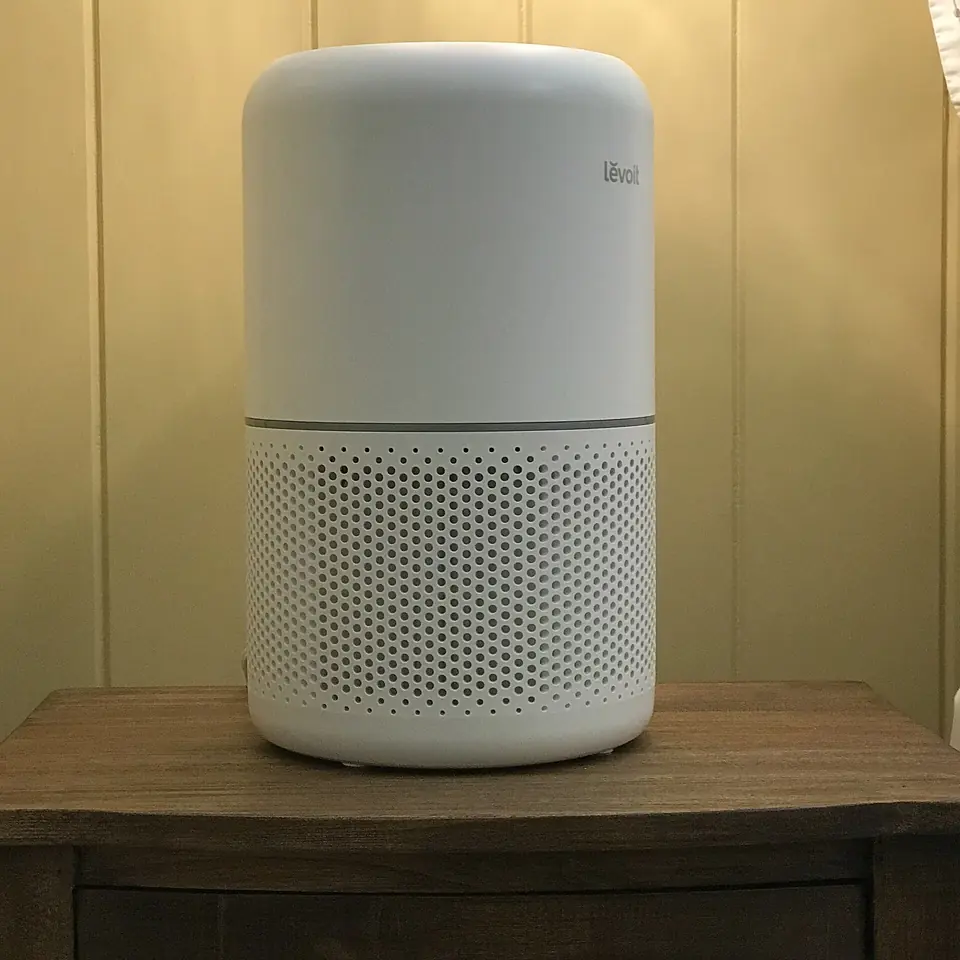
A portable purifier cleans a single room. It can be useful for a bedroom or a home office, and it is easy to move, but it does nothing for the rest of the house, and it needs regular filter changes and cleaning to keep working. The two are not competitors: a portable unit is a room-level tool and a whole-home unit is a house-level tool. For a home that wants its air treated everywhere, the whole-home unit is the one that matches the scale of the problem.
UV purification uses ultraviolet light inside the ductwork or at the indoor coil. The light is aimed at the coil surface and the airstream, where it disrupts the microorganisms that grow in the damp, dark environment of a cooling coil. A clean coil also transfers heat better and produces fewer odours, so UV light does double duty: it treats the airstream and it keeps the coil cleaner.
It is important to be clear about what UV does and does not do. It does not capture dust, pollen, or other particles: that is the filter's job. It does not replace filtration or ventilation. It is a purification step that works alongside a filter, and its effect is on the coil and the air passing the light, not on the surfaces of the rooms. A home that wants particle capture needs filtration; a home that wants purification needs UV. Many homes benefit from both.
Installation starts with a look at the air handler and the ductwork to find the right location, usually at the indoor coil or in the main supply duct, where the light can cover the coil surface and the airstream. The UV unit is mounted, wired into the system's power, and positioned so the light reaches the coil without shining on wiring or plastic parts that it could damage.
For a whole-home purifier that is not UV-based, such as an in-duct electronic or media unit, the installation is similar: a housing is fitted into the ductwork and connected to power and controls. Once installed, the system is tested in both heating and cooling modes, and the homeowner is shown how the unit works and when its lamps or media need replacing. The job usually takes a few hours.
A purifier is part of the HVAC system, not an accessory bolted on beside it. It only works when air is moving, so it runs when the system runs, which is why it is installed at the air handler or in the main duct, where all the air passes. A purifier that is too small for the system treats only part of the airflow; one that is poorly placed treats the air unevenly.
The purifier also has to be matched to the rest of the system. A UV lamp needs a clear line to the coil, and the filter upstream of it should be in good condition so dust does not coat the lamp and block the light. Regular maintenance keeps both working: the lamp is replaced on schedule, the coil is kept clean, and the filter is changed. A purifier that is installed and then forgotten gradually stops doing its job.
The type of purifier is the main factor. A UV lamp system is a different job from a whole-home electronic purifier or a large media unit, and each has different equipment and installation requirements. The size of the system matters too: a larger air handler needs a larger or more powerful unit.
The ductwork and the location add their own variables. A unit that fits easily at the air handler is a quicker job than one that needs a new section of ductwork or a custom mounting. Electrical work, controls, and whether the job is combined with other work such as a filter upgrade or a coil cleaning also affect the scope. A written quote after a site visit gives the clearest picture for a particular home.

Service providers may work on major equipment brands including Carrier, Trane, Lennox, Goodman, Rheem, Daikin, Mitsubishi Electric, York, Bryant, American Standard, and Bosch. Brand support is unconfirmed — see the full brand list.
Heating and cooling help is available across Salt Lake City and the surrounding Salt Lake Valley. See the service areas page for the ZIP codes and cities covered.
A filter captures particles, dust, pollen, and other airborne matter, as air passes through it. A purifier, such as a UV unit, targets microorganisms on the coil and in the airstream. They do different jobs: filtration captures particles, purification treats what grows on the coil. Many homes use both.
UV light disrupts microorganisms on the indoor coil and in the air passing the light, and it helps keep the coil cleaner, which reduces odours. It does not capture dust or pollen: that is the filter's job, and it does not treat the surfaces of the rooms. It is a purification step that works alongside filtration.
Usually at the indoor coil or in the main supply duct, where all the air the system moves passes through it. The location is chosen so the light or the purifying element covers the coil surface and the airstream. A technician picks the spot based on the layout of the air handler and ducts.
A purifier helps with what grows on the coil and in the airstream, but inversion season is mainly a particle problem, and particles are the filter's job. During inversion, a good filter, such as a MERV 13, does most of the work, and the purifier continues its own job alongside it.
The cost depends on the type of purifier, the size of the HVAC system, and how easily it fits at the air handler or in the ductwork. Electrical work, controls, and whether the job is combined with other work also affect the scope. A written quote after a site visit gives the clearest picture for a particular home.
Indoor air quality help in Salt Lake City — filtration, purification, humidity control, and ventilation for cleaner, more comfortable air at
Learn more →Air filtration systems in Salt Lake City — whole-home filtration, filter types, and what they capture. Learn how filtration fits your HVAC s
Learn more →
HVAC maintenance in Salt Lake City — whole-system inspections, tune-ups, and seasonal checks that help heating and cooling run reliably and
Learn more →How to improve indoor air quality at home — filtration, ventilation, humidity control, and habits that help Salt Lake City homeowners breath
Learn more →
Check HVAC service coverage across Salt Lake City and nearby Wasatch Front communities. Review the ZIP codes and confirm availability for yo
Learn more →Explore the relevant service page or check whether your ZIP code is included in current service coverage.