Professional Commercial AC Repair in Salt Lake City, UT
Commercial AC repair in Salt Lake City for offices, retail spaces, and restaurants. Review common cooling faults and check local provider av
Learn more →
Commercial heating and cooling in Salt Lake City covers a wide range of buildings, from downtown offices to retail shops, restaurants and light industrial spaces across the valley. These systems work harder than a home system, serve more people, and often run through long operating hours, so they need a different approach: bigger equipment, zoned control, and work planned around the business. This page is the overview for business properties — what is covered, how commercial systems differ from home systems, and how to request help.
The commercial group covers the same four jobs as the residential group — repair, installation, replacement and maintenance — applied to business equipment. Repair covers rooftop packaged units, split systems and zone controls that have failed. Installation covers new systems for new or refitted premises, designed around the building's size, layout and use. Replacement covers worn-out packaged units and split systems. Maintenance covers scheduled visits under an agreement, with a written record of what was checked.
The properties covered are offices, retail shops, restaurants and light industrial spaces. Each brings its own load: kitchens throw heat into dining rooms, retail fills with people at midday, offices run long hours, and industrial spaces need ventilation for their processes. The service pages for each job explain the equipment and the faults in detail.
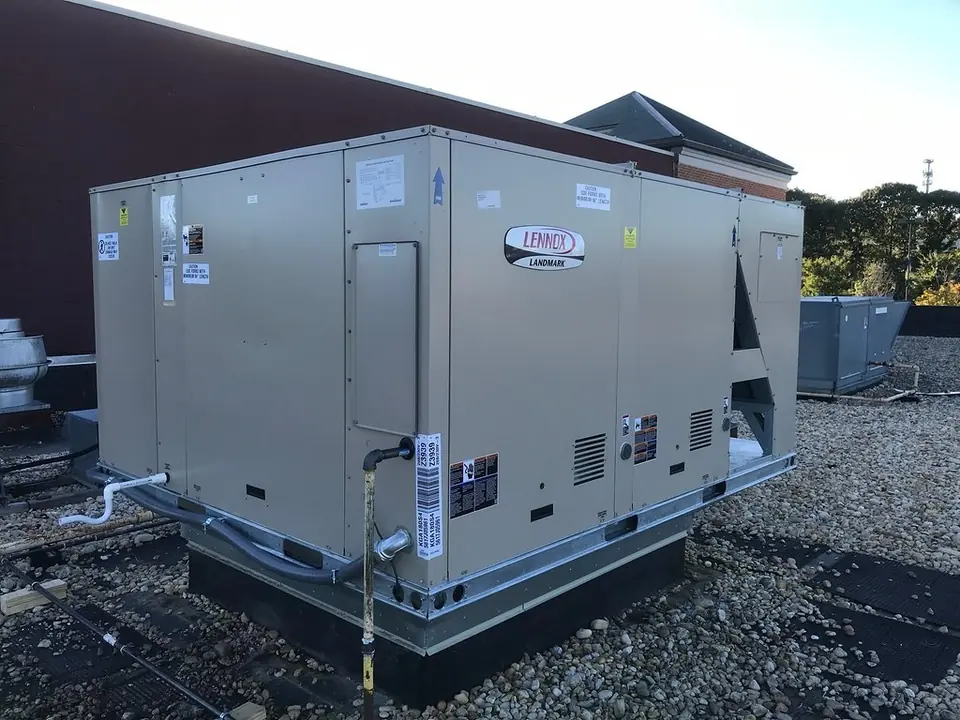
Rooftop packaged units are the most common commercial equipment in the valley: a single cabinet on the roof that packs heating, cooling and air movement together, serving a floor or a whole small building through ductwork below. Split systems separate the condenser outside from the air handler inside and suit smaller premises or spaces a packaged unit cannot serve. Multi-zone systems add dampers and controls so different parts of a building can be heated or cooled independently.
Larger buildings use larger plant: chilled-water systems and variable-refrigerant-flow systems that serve many zones from shared equipment. The commercial installation page explains how those systems are designed around a building's zones, occupancy and ventilation needs, and the rooftop repair page covers the faults of the packaged units themselves.
A commercial maintenance agreement sets out a schedule of planned visits across the year, so equipment is checked before the cooling and heating seasons rather than only when something breaks. Typical visits include filter changes, coil cleaning, belt and motor checks, drain clearing, and a review of controls and safety devices. The agreement describes which equipment is covered and how often each item is checked, giving facility managers a predictable routine to follow.
Planned maintenance also creates a written record of the system's condition over time, which helps with budgeting for repairs or replacement. When a technician visits on a set schedule, small issues such as worn belts, dirty coils, or loose connections can be spotted early. Business owners should ask what is included in any agreement, how visits are scheduled, and how urgent faults are handled between visits, so expectations are clear from the start.
Scale is the first difference: commercial units are rated in larger tonnages, serve more people, and run longer hours. Zoning is the second: a home has one or two zones, while a commercial building may have a dozen, each with its own damper and thermostat, and a fault in one zone must not take down the rest. Controls are the third: commercial systems use building controls and schedules rather than a single thermostat on a hallway wall.
The work itself differs too. Commercial repair is planned around trading hours, commercial installation is a design project involving load calculations by zone and occupancy, and commercial maintenance is a scheduled agreement with a written record. Permits and compliance notes apply differently to business premises, and the commercial installation page explains those in detail.
When requesting commercial HVAC help, it helps to have a few details ready: the type of building, the equipment involved, the symptoms noticed, and any recent service history. Knowing the age of the system and whether the problem affects the whole building or one zone helps a technician prepare for the visit. Photos of equipment nameplates and notes about unusual noises, smells, or temperature swings can also be useful.
A qualified HVAC technician can then assess the system, explain what has been found, and discuss the options available, whether that is a repair, a part replacement, or a planned upgrade. For larger projects, a site visit and a written scope of work give both sides a clear record of what will be done. Use the contact page to describe the building and the issue, and the service provider can arrange a visit at a time that suits the business.

Service providers may work on major equipment brands including Carrier, Trane, Lennox, Goodman, Rheem, Daikin, Mitsubishi Electric, York, Bryant, American Standard, and Bosch. Brand support is unconfirmed — see the full brand list.
Heating and cooling help is available across Salt Lake City and the surrounding Salt Lake Valley. See the service areas page for the ZIP codes and cities covered.
Commercial HVAC services cover offices, retail shops, restaurants, and other commercial properties across Salt Lake City and the surrounding valley. Coverage depends on the equipment type and the scope of work, so it is worth describing the building and the system when making contact.
Scale, zoning and controls. Commercial units are larger, serve more people and run longer hours. A commercial building may have many zones, each with its own damper and thermostat, while a home has one or two. Commercial systems use building controls and schedules, and the work is planned around trading hours, with maintenance under a scheduled agreement and a written record.
Yes, maintenance agreements are available for businesses and set out scheduled checks across the year, covering items such as filters, coils, belts, drains, and controls. The agreement describes which equipment is included and how often it is checked, so ask for the details that apply to your building.
Yes. Repair work is planned around the business: faults are isolated to one zone or one unit where possible so the rest of the building keeps running, and work that needs the system off is scheduled for the business's quietest hours. The business is told what will be out of service and for how long, so staff and customers can be planned around it.
Describe the building, the system and the problem through the contact form, or call the number shown on this page. Include the property type, the equipment involved — rooftop unit, split system, zone controls — and the ZIP code. The request is reviewed first for availability in the area, and pricing details are discussed with the service provider before any work is authorised. No prices are published on this website.
Commercial AC repair in Salt Lake City for offices, retail spaces, and restaurants. Review common cooling faults and check local provider av
Learn more →Explore commercial HVAC installation in Salt Lake City, including system selection, rooftop units, sizing, and replacement planning for prop
Learn more →Commercial HVAC maintenance in Salt Lake City: scheduled inspections, filter and coil care, and service planning for business heating and co
Learn more →Rooftop HVAC unit repair in Salt Lake City — packaged rooftop systems for commercial buildings. Learn common faults and what a technician ch
Learn more →
Request HVAC help in Salt Lake City. Share your heating or cooling issue, system type, and ZIP code so we can check whether a local provider
Learn more →Explore the relevant service page or check whether your ZIP code is included in current service coverage.