
Professional Heating Repair in Salt Lake City, UT
Heating repair in Salt Lake City for furnaces, heat pumps, and other heating systems. Learn common faults, warning signs, and what a technic
Learn more →
The furnace is the heart of winter comfort in most Salt Lake City homes. When cold air settles into the valley and the wind comes off the Wasatch, a gas or electric furnace runs for long hours, and thin air at around 4,226 feet means gas furnaces produce less heat from the same amount of fuel than they would at sea level. This page covers furnace faults specifically — ignition, burners, the heat exchanger and the blower — rather than heating faults in general.
Ignition problems are among the most frequent furnace faults. A furnace that clicks without lighting, or that lights and then shuts off within seconds, may have a failing igniter, a dirty flame sensor, or a problem with the gas supply. Burner issues can also cause trouble: burners that are dirty or misaligned may produce an uneven flame, noisy operation, or incomplete combustion that wastes fuel and leaves the home underheated.
Airflow problems are another common source of complaints. A worn blower motor, a clogged filter, or a failing limit switch can cause the furnace to overheat and shut itself down, or to cycle on and off in short bursts. Thermostat faults round out the list: a thermostat that reads the room temperature incorrectly, or that has lost its connection to the furnace, can leave the system running when it should stop, or silent when it should start.
The clearest sign is a furnace that blows cold air, or no air at all, when the heat is on. Short cycling is another warning: a furnace that turns on and off every few minutes never runs long enough to warm the home evenly, and the constant starting and stopping wears components faster. Unusual sounds, such as banging when the burner lights, squealing from the blower, or a rattling that was not there before, all deserve attention.
Other signs are quieter but just as important. A pilot light that keeps going out, soot or scorch marks around the furnace, or a flame that burns yellow instead of steady blue can point to combustion problems. Energy use that climbs without a change in household habits may mean the furnace is working harder than it should. Any of these signs is a reason to have the system checked before the next cold snap.
Most furnace faults live in three places. Ignition: a hot-surface ignitor that has cracked or worn out, a spark ignitor that no longer sparks, or a flame sensor coated in oxidation that cannot prove the flame is lit, so the gas valve shuts off seconds after lighting. Burners: ports clogged with dust and rust that make the flame lift, flicker yellow or roll out of the burner box, and a gas valve that sticks or fails to open.
The heat exchanger is the third place, and the most serious. It is the metal chamber separating combustion gases from the air blown into the home, and it is inspected for cracks, rust and soot. A cracked heat exchanger is a safety matter, not a wear item to patch, and it is usually the fault that ends a furnace's life rather than starting a repair.
A gas smell near the furnace means leaving the house and calling the gas utility's emergency line or 911 — do not switch lights on or off, and do not relight the furnace. Soot around the burner, a flame that rolls out of the burner box, or a furnace that repeatedly shuts itself down are also signs to stop using the system and call a professional.
Carbon monoxide detectors are the household's other line of defence: test them before the heating season and replace their batteries as needed. A detector that alarms means leaving the house and calling the gas utility's emergency line or 911. Maintenance reduces one source of risk by keeping the burner clean and the flue clear, but it is not a substitute for working detectors.
The main factors are the part that failed and where it sits. An ignitor or flame sensor is a small part reached through the burner compartment; a gas valve, a blower motor or a control board is a major component, and the labour to reach and replace it differs. A heat exchanger fault is not a repair at all in most cases — it is the fault that leads to a replacement conversation.
The furnace's condition is the other factor. A unit that has been neglected may have a fouled burner, a worn ignitor and a dusty blower at once, and a repair that reveals a second fault takes longer than one that finds a single cause. No prices are published on this website; ask the service provider for pricing details before authorising any work.
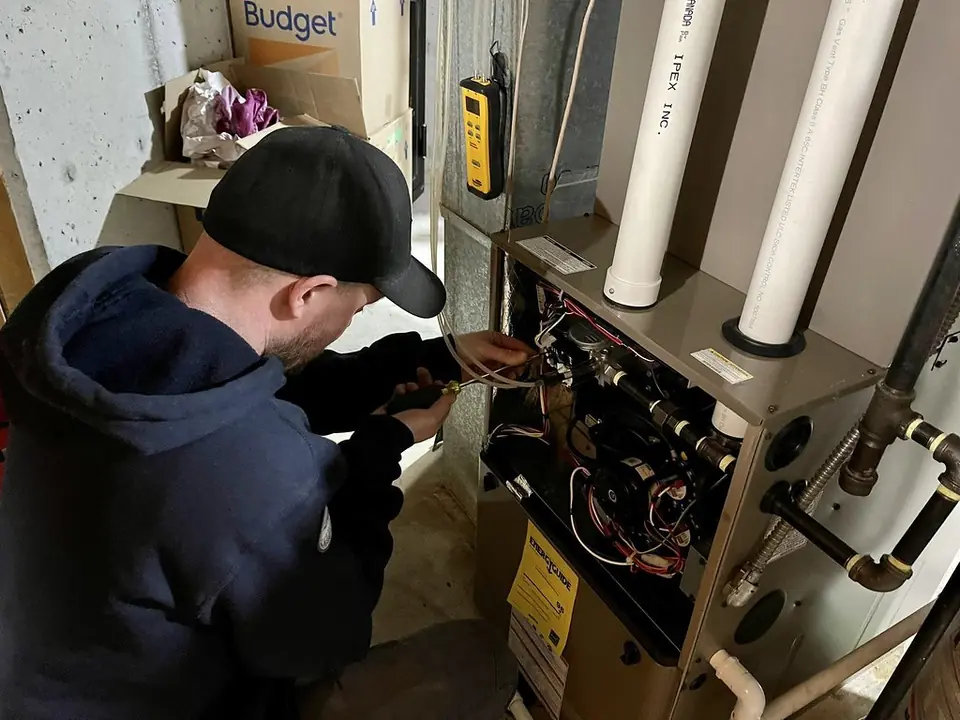
Service providers may work on major equipment brands including Carrier, Trane, Lennox, Goodman, Rheem, Daikin, Mitsubishi Electric, York, Bryant, American Standard, and Bosch. Brand support is unconfirmed — see the full brand list.
Heating and cooling help is available across Salt Lake City and the surrounding Salt Lake Valley. See the service areas page for the ZIP codes and cities covered.
The most common causes are a burner that is not lighting — an ignitor or flame sensor fault — a gas valve that is not opening, or a blower running without the burner firing. A thermostat set to fan-only will also blow unheated air, and a clogged filter can overheat the furnace until its limit switch shuts the burner down. A technician watches a full ignition cycle to find where the sequence stops.
Short cycling has several causes: a clogged filter overheating the furnace, a flame sensor that cannot prove the flame, a thermostat placed where it heats too quickly, or a furnace oversized for the home. The pattern matters — a furnace that lights, runs briefly and shuts down points to the flame sensor or the limit switch, and a technician checks both before recommending a part.
Yes. The heat exchanger separates combustion gases from the air blown into the home, and a crack can let those gases into the living space. Signs include soot around the burner, a flame that changes shape when the blower starts, and a detector alarm. A cracked heat exchanger is not patched; it is the fault that usually leads to replacing the furnace.
If you smell gas, leave the house and call your gas utility's emergency line or 911. Do not stay inside to investigate, and do not switch lights or appliances on or off. Once outside, the gas utility can advise on the next steps.
Many common furnace repairs are completed in a single visit once the fault has been diagnosed. The time needed depends on the problem, whether parts are on hand, and how easy the furnace is to reach. A technician can give a clearer sense of timing after the diagnosis.
Cost depends on the fault, the type of furnace, the parts required, and how easy the equipment is to reach. A small fix such as a flame sensor involves far less work than a blower motor or control board. A technician can explain the scope of the work after diagnosing the problem.
Heating repair in Salt Lake City for furnaces, heat pumps, and other heating systems. Learn common faults, warning signs, and what a technic
Learn more →Furnace installation in Salt Lake City — gas and electric furnaces, sizing, and the installation process. Learn what affects cost before you
Learn more →Furnace replacement in Salt Lake City — when replacement beats repair, how a new furnace is sized, and what affects cost. Compare your optio
Learn more →Furnace blowing cold air in your Salt Lake City home? Learn common causes — thermostat, ignition, airflow, and filters — and when to call a
Learn more →Carbon monoxide risks every homeowner should know — sources, warning signs, detectors, and what to do if you suspect a leak. Read this safet
Learn more →
Check HVAC service coverage across Salt Lake City and nearby Wasatch Front communities. Review the ZIP codes and confirm availability for yo
Learn more →Explore the relevant service page or check whether your ZIP code is included in current service coverage.