Commercial HVAC Repair, Installation & Maintenance in Salt Lake City
Commercial HVAC repair, installation, and maintenance in Salt Lake City for offices, retail spaces, and restaurants. Confirm the service you
Learn more →
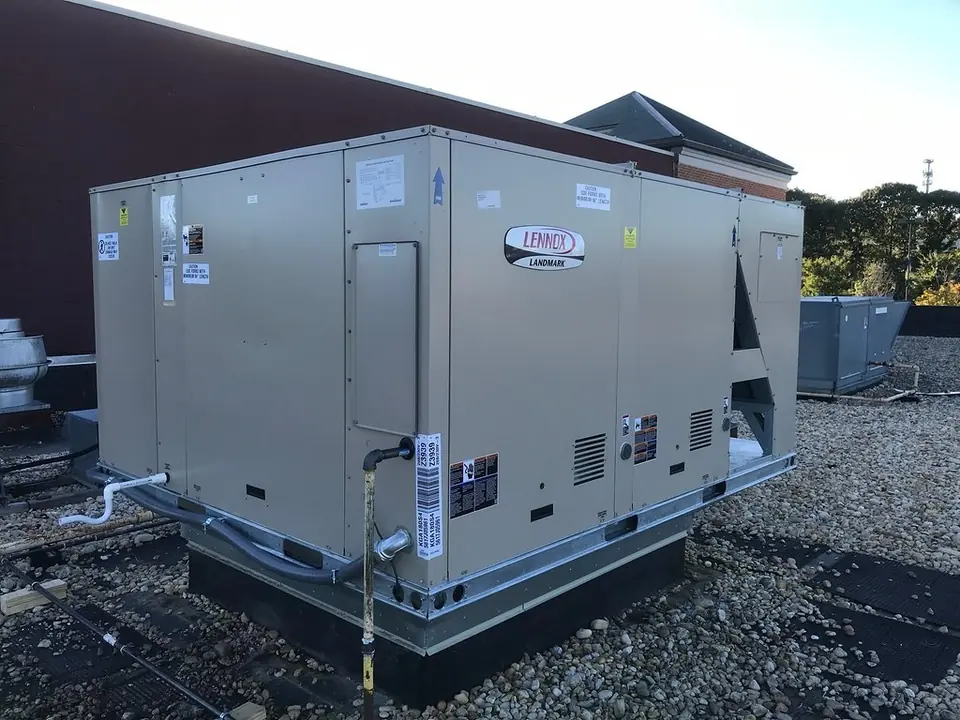
Rooftop packaged units are the most common commercial heating and cooling equipment in Salt Lake City, sitting above offices, shops and restaurants across the valley. They pack heating, cooling and air movement into a single cabinet, which makes them practical — but also means a single fault can take out heating and cooling at once. This page covers the rooftop unit itself: the cabinet, the curb it sits on, the economizer, and the faults that are specific to equipment that lives on a roof.
A rooftop unit's faults start with where it lives. The cabinet weathers sun, snow and wind, and its seals, gaskets and drain pan deteriorate faster than indoor equipment. The economizer damper — the louver that brings in cool outside air — sticks, its actuator fails, or its sensors drift, leaving the unit cooling with outside air when it should not, or ignoring free cooling when it should use it. The gas heat section has its own faults: burners fouled with dust, an ignitor worn out, and a heat exchanger inspected for cracks like any furnace.
Inside the cabinet, the compressor, the condenser and evaporator coils, the blower and its belts, and the refrigerant circuit are the same parts as a split system, packed into one box. A belt that has stretched slips and cuts airflow; a drain pan that has rusted through leaks into the building below; a curb seal that has failed lets rain in around the unit's base.
Problems inside a building often show up before anyone looks at the roof. Uneven temperatures between zones, weak airflow from vents, and a unit that runs constantly without reaching the set temperature all suggest a fault. Water staining on ceilings or around diffusers can point to a blocked drain or a cracked drain pan, while musty smells may mean moisture is collecting where it should not.
From outside, unusual noises are a useful warning. Grinding, squealing, or rattling from the unit can signal a worn belt or bearing, and a fan that sounds laboured may be close to failing. Ice on coils in summer, or a unit that cycles on and off repeatedly, also warrants a look. Noting which zones are affected and when the symptoms started helps a technician focus the inspection.
A rooftop inspection starts outside the cabinet: the curb and flashing for a watertight seal, the roof around the unit for ponding water and damaged membrane, and the disconnect and conduit for weather damage. The cabinet is opened and the coils are inspected for dirt and damage, the blower belts for wear and tension, the drain pan for rust and blockage, and the economizer damper for free movement.
Then the unit is run through a full cycle in both modes where it has them: cooling, with refrigerant pressures and temperatures measured, and heating, with the burner flame and ignition sequence watched. The gas section, the electrical connections and the safety controls are tested last, and anything worn is reported before it becomes a breakdown that takes the whole unit down.
A repair is usually the sensible choice when the unit is relatively new, the fault is a single component such as a capacitor, belt, or sensor, and the rest of the system is in good condition. Repairs also make sense when the unit's capacity and zoning still suit the building and the fault has not caused wider damage.
Replacement becomes worth considering when breakdowns keep returning, the unit is old and parts are hard to source, or the compressor has failed. A new unit can also be an opportunity to correct sizing or zoning if the building's use has changed. A technician can assess the unit's condition, explain the options, and outline the factors involved, so the decision is made with a full understanding of the equipment's state rather than in the middle of a failure.
The main factors are the part that failed and how the unit is reached. A belt, a capacitor or a damper actuator is a small part; a compressor, a coil or a heat exchanger is a major component, and reaching it means working on a roof — through a hatch or up a ladder — with the cabinet open to the weather. A unit whose curb seal has failed adds roofing work to the repair.
The unit's size is the other factor. Packaged units are rated in tonnage like any cooling system, and larger units carry larger compressors, coils and fan motors. No prices are published on this website; ask the service provider for pricing details before authorising any work.

Service providers may work on major equipment brands including Carrier, Trane, Lennox, Goodman, Rheem, Daikin, Mitsubishi Electric, York, Bryant, American Standard, and Bosch. Brand support is unconfirmed — see the full brand list.
Heating and cooling help is available across Salt Lake City and the surrounding Salt Lake Valley. See the service areas page for the ZIP codes and cities covered.
Uneven temperatures across the floor it serves, weak airflow from the diffusers, water staining on the ceiling below the unit, a unit that short-cycles or will not hold temperature, and new noises from the cabinet — a slipping belt, a failing fan motor or a compressor struggling to start. A damper stuck open also shows up as a building that is cold on mild days or warm when it should be cooling.
Twice a year is the usual rhythm: a cooling check in spring, before summer heat, and a heating check in fall, before winter. A unit that runs long hours, serves a kitchen or a high-occupancy space, or has a history of faults benefits from the same rhythm without skipping a season. The inspection covers the curb, the economizer, the coils, the belts, the drain pan and the gas section.
Repair usually suits a newer unit with a single component fault, while replacement is worth considering when breakdowns keep returning, parts are hard to source, or the compressor has failed. A technician can assess the unit and explain the options for the specific equipment.
Rooftop units from many manufacturers are serviced, covering common packaged-unit designs. If a unit uses a less common design or parts are hard to obtain, the technician will explain what is possible after inspecting it.
It shapes the job rather than preventing it. Access is by roof hatch, fixed ladder or portable ladder, and the technician works with the cabinet open to the weather, so high wind or heavy rain can delay a repair. A unit whose curb seal has failed or whose roof around it is ponding water needs roofing attention as well as HVAC work, and that is reported as part of the inspection.
Commercial HVAC repair, installation, and maintenance in Salt Lake City for offices, retail spaces, and restaurants. Confirm the service you
Learn more →Commercial AC repair in Salt Lake City for offices, retail spaces, and restaurants. Review common cooling faults and check local provider av
Learn more →Explore commercial HVAC installation in Salt Lake City, including system selection, rooftop units, sizing, and replacement planning for prop
Learn more →
Request HVAC help in Salt Lake City. Share your heating or cooling issue, system type, and ZIP code so we can check whether a local provider
Learn more →Explore the relevant service page or check whether your ZIP code is included in current service coverage.