
Professional Furnace Repair in Salt Lake City, UT
Furnace repair in Salt Lake City — ignition, burners, heat exchangers, airflow, and thermostat faults. Learn the signs and when to call for
Learn more →
A furnace that gets regular attention handles a Salt Lake City winter far more reliably than one that is ignored until it breaks. Cold months ask a lot of heating equipment, and thin air at around 4,226 feet means gas furnaces work harder all season. Dust, wear and small faults build up quietly over the summer, and a tune-up before the heating season is built around the parts that fail in cold weather: the burner, the ignitor, the flame sensor, the heat exchanger and the blower.
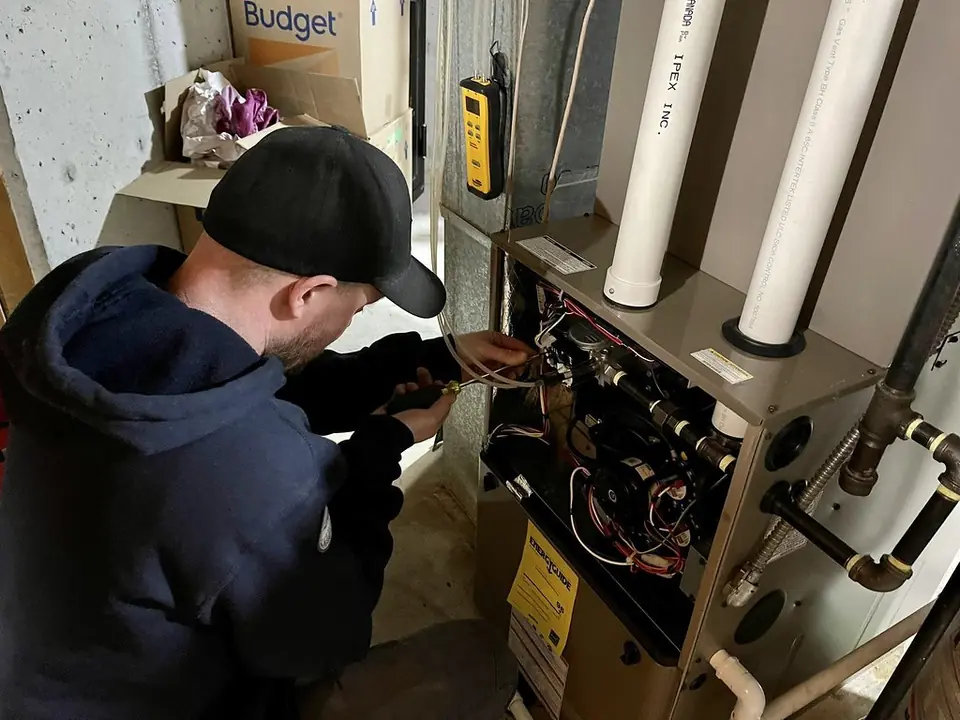
A heating tune-up works through the combustion side first. The burner assembly is cleaned, the flame sensor is cleaned or replaced, and the ignitor — hot-surface or spark — is tested. The heat exchanger is inspected visually for cracks, rust and soot, and the flue is checked for blockage and correct draft. The blower motor and wheel are cleaned, the filter is checked, and the gas valve and safety controls are tested.
The visit ends with a full heating cycle: ignition sequence, burner flame pattern, blower speeds, and the temperature rise across the heat exchanger. A flame that lifts, flickers yellow or rolls out of the burner box is reported, as is any sign of soot, which points to incomplete combustion.
Once a year, in fall, before the heating season — and the reason is the length of the season, not the calendar. A furnace in Salt Lake City runs for months at a time, and a yearly visit covers the burner, ignition, heat exchanger, blower and safety controls before that long run begins. Skipping a year means the burner fouls, the flame sensor oxidises and the blower loads with dust unchecked, and the faults that result arrive on the coldest nights.
Older furnaces and furnaces with a history of faults benefit from the same yearly rhythm without exception, and a furnace that needed a part last winter should be checked the following fall rather than assumed fixed. The filter sits on its own shorter rhythm: checked monthly through the heating season and changed when it is loaded, because a clogged filter overheats the furnace until its limit switch shuts the burner down.
The main visit belongs in fall, before the first sustained cold, when a fault found early is a repair rather than a breakdown on a freezing night. Between visits, the homeowner's jobs are specific to heating: change the filter before the season, keep supply and return vents unblocked by furniture and rugs, and keep the area around the furnace clear of stored items.
Test the household carbon monoxide detectors before the season and replace their batteries as needed. Watch for the early signs a tune-up would catch: a furnace that needs several tries to light, a burner flame that looks yellow rather than blue, new soot around the burner, or rooms that heat unevenly.
Maintenance is planned work on a system that is still running. It is about cleaning, checking, and adjusting so the equipment keeps working well and small problems are found early. A tune-up happens on the homeowner's schedule, before the heating season, and nothing needs to be broken for it to be worthwhile.
Repair is unplanned work on a system that has already failed or is showing a clear fault, such as cold air, short cycling, or a furnace that will not start. Repairs fix a specific problem and are driven by symptoms, while maintenance is driven by the calendar. The two work together: regular maintenance reduces the need for repairs, and a repair visit is a good time to ask whether the system is due for a tune-up as well.
The main factors are the type of furnace and its condition. A condensing furnace with a secondary heat exchanger and condensate drain takes longer than a standard-efficiency model, and a burner assembly fouled with dust takes longer to clean than one serviced last fall. Extra work found during the visit — a worn ignitor, a fouled flame sensor, a blower wheel thick with dust — adds to the job.
Access matters too: a furnace in a tight closet or a low crawl space slows the work, and a flue that needs attention adds a further step. No prices are published on this website; ask the service provider for pricing details before authorising any work.
Service providers may work on major equipment brands including Carrier, Trane, Lennox, Goodman, Rheem, Daikin, Mitsubishi Electric, York, Bryant, American Standard, and Bosch. Brand support is unconfirmed — see the full brand list.
Heating and cooling help is available across Salt Lake City and the surrounding Salt Lake Valley. See the service areas page for the ZIP codes and cities covered.
Change the filter when it is loaded — checked monthly through the heating season — keep supply and return vents unblocked by furniture and rugs, keep the area around the furnace clear of stored items, and test the household carbon monoxide detectors before the season. Watch for the early signs a tune-up would catch: a furnace that needs several tries to light, a burner flame that looks yellow rather than blue, or new soot around the burner.
Once a year, in fall, before the heating season. A furnace runs for months at a time in a Salt Lake City winter, and a yearly visit covers the burner, ignition, heat exchanger, blower and safety controls. Homes that run the furnace hard, or older units with a history of faults, benefit from the same yearly rhythm without skipping a season.
Early autumn, in September or October, is the usual time, before the first cold nights arrive. A tune-up scheduled then means the furnace is cleaned and checked while demand is lower and before it faces the hardest part of the season. If autumn has passed, a visit at any point before the coldest weeks still helps.
Yes. The visit includes inspecting the heat exchanger, checking the flue for blockage and draft, testing the gas valve and safety controls, and watching the burner flame pattern. A cracked heat exchanger, a blocked flue or a flame that rolls out are reported as safety matters. The check looks for problems; it does not make a furnace safe by itself, and any fault found still needs repair.
Maintenance reduces one source of risk by keeping the burner clean, the heat exchanger inspected and the flue clear, so combustion gases vent properly. It cannot remove the risk entirely, and it is not a substitute for working carbon monoxide detectors in the home. If a detector alarms, leave the house and call the gas utility's emergency line or 911.
Furnace repair in Salt Lake City — ignition, burners, heat exchangers, airflow, and thermostat faults. Learn the signs and when to call for
Learn more →
HVAC maintenance in Salt Lake City — whole-system inspections, tune-ups, and seasonal checks that help heating and cooling run reliably and
Learn more →
How often should HVAC systems be serviced? Learn recommended maintenance timing for AC, furnaces, and heat pumps — and what skipping service
Learn more →
Check HVAC service coverage across Salt Lake City and nearby Wasatch Front communities. Review the ZIP codes and confirm availability for yo
Learn more →Explore the relevant service page or check whether your ZIP code is included in current service coverage.