Commercial HVAC Repair, Installation & Maintenance in Salt Lake City
Commercial HVAC repair, installation, and maintenance in Salt Lake City for offices, retail spaces, and restaurants. Confirm the service you
Learn more →
When the air conditioning fails in a Salt Lake City office, shop or restaurant, the problem is not only comfort — it is lost trading hours, unhappy staff, and customers who may not come back. Commercial cooling systems work under heavier loads than home systems, and a fault can affect a whole floor or a whole dining room at once. This page covers commercial cooling faults: packaged and split systems serving business premises, the loads that break them, and how repair work is fitted around a business that has to keep trading.
Commercial cooling fails differently from home cooling because the loads are different. A restaurant kitchen throws heat into the dining room all day, a retail space fills with people at midday, and an office runs its system through long operating hours. Compressors wear from long runtimes, condenser coils foul with dust from loading bays and car parks, and economizer dampers — the dampers that bring in cool outside air — stick open or shut, leaving the system fighting the weather.
Zones multiply the faults. A multi-zone system can lose one zone to a failed damper or a zone control fault while the rest of the building cools normally, and a packaged unit serving a single open space can fail outright and take the whole floor with it. Refrigerant leaks, failed fan motors and worn contactors are the same parts as in a home system, carrying a heavier load.
The earliest signs of trouble are often noticed by staff or customers before anyone checks the equipment. Uneven temperatures between rooms or zones, warm air from vents when cooling is called for, and a system that cycles on and off frequently all point to a developing fault. Rising indoor humidity, musty smells from vents, or water staining near ceiling diffusers can signal a drainage problem that needs attention.
Sounds are another useful clue. Grinding, rattling, or squealing from a rooftop unit, or a fan that sounds strained, may mean a belt or bearing is wearing out. A sudden rise in energy use without a change in hours or occupancy can also suggest the system is struggling. Noting when symptoms appear and which areas are affected helps a technician narrow down the fault quickly when they arrive on site.
Repair work on a business system is planned around the business, not the other way around. The first step is isolating the fault to one zone or one unit, so the rest of the building keeps cooling while the repair is done. A failed zone damper can be held open or shut to restore partial cooling, and a packaged unit can sometimes be run at reduced capacity while a part is sourced.
Communication is part of the job: the business is told what failed, what the repair involves, and what will be out of service while it is done, so staff and customers can be planned around it. Work that needs the system off — a compressor swap, a coil replacement — is scheduled for the quietest hours the business has, and the system is tested through a full cooling cycle before it is handed back.
Deciding between repair and replacement comes down to the age and condition of the equipment, how often it has broken down, and how much of the business it affects. A single failed capacitor or a refrigerant leak on a relatively new unit is usually a straightforward repair. Repeated breakdowns, rising running costs, and difficulty finding parts for older equipment point toward replacement being the more sensible option.
Replacement also offers a chance to rethink zoning and capacity, especially if the building's use has changed since the system was installed — a former office floor turned into a restaurant, for example, has very different cooling needs. A technician can assess the existing system, outline the options, and explain the factors involved, so the business can make the decision with a full picture rather than under pressure during a breakdown.
The main factors are the size of the system and the part that failed. A packaged unit serving a whole floor carries larger compressors, coils and fan motors than a home system, and the labour to reach them — on a roof, behind a ceiling, or in a plant room — differs. Refrigerant work adds its own factor, because a commercial leak must be found and fixed across a larger pipe run.
The building's layout is the other factor. A system with several zones takes longer to diagnose than a single-zone unit, and a unit that needs a crane or a roof hatch to reach takes longer than one at ground level. No prices are published on this website; ask the service provider for pricing details before authorising any work.

Service providers may work on major equipment brands including Carrier, Trane, Lennox, Goodman, Rheem, Daikin, Mitsubishi Electric, York, Bryant, American Standard, and Bosch. Brand support is unconfirmed — see the full brand list.
Heating and cooling help is available across Salt Lake City and the surrounding Salt Lake Valley. See the service areas page for the ZIP codes and cities covered.
That depends on the fault, the equipment type, and whether the parts needed are available. A technician first diagnoses the problem and explains what is involved, so the business has a realistic picture of the work and timing before repairs begin.
Long runtimes, heavy occupancy loads, kitchen and equipment heat, fouled condenser coils, stuck economizer dampers, refrigerant leaks, and worn compressors, fan motors and contactors. Multi-zone systems add zone damper and control faults. The loads are heavier than in a home, so the same parts wear faster and the faults affect more people at once.
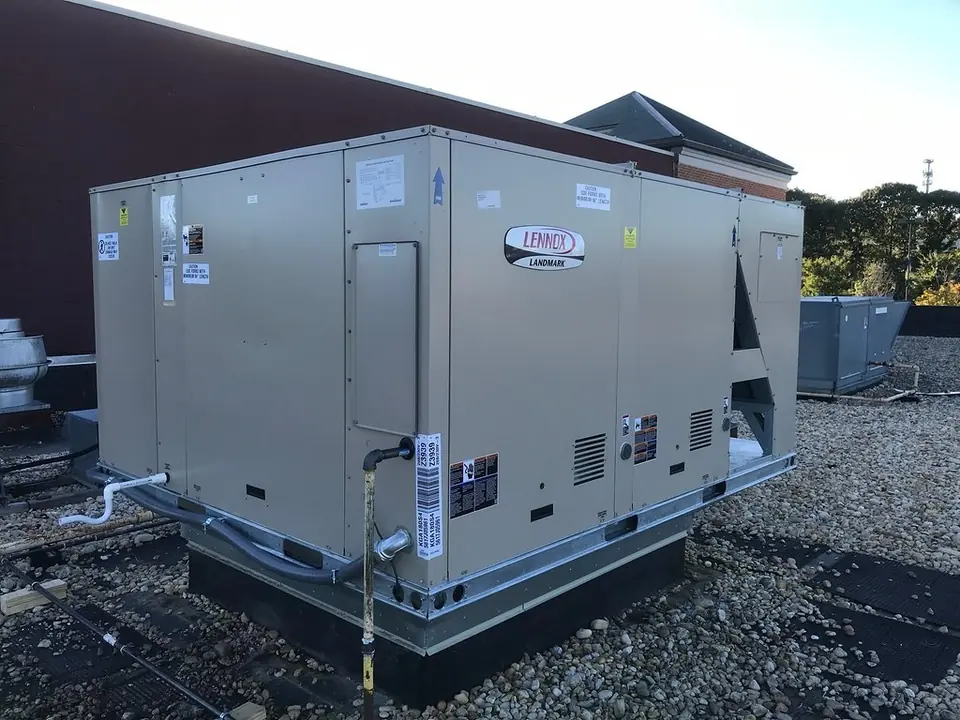
Yes, rooftop packaged units are a common part of commercial AC repair in Salt Lake City. Repairs cover compressors, fans, coils, drains, electrical components, and controls, along with checks of the unit's housing and roof curb where access allows.
By isolating the fault to one zone or one unit so the rest of the building keeps cooling, by restoring partial cooling where a damper or control allows it, and by scheduling work that needs the system off for the business's quietest hours. The business is told what will be out of service and for how long, so staff and customers can be planned around it.
Yes. Restaurants, retail shops, offices and other commercial properties are covered, including the cooling loads that come with kitchens, high occupancy and long operating hours. Rooftop packaged units, which are the most common commercial equipment in the valley, are covered on the rooftop unit repair page.
Commercial HVAC repair, installation, and maintenance in Salt Lake City for offices, retail spaces, and restaurants. Confirm the service you
Learn more →
AC repair in Salt Lake City for cooling problems, weak airflow, frozen coils, and electrical faults. Learn the signs and what technicians ch
Learn more →Commercial HVAC maintenance in Salt Lake City: scheduled inspections, filter and coil care, and service planning for business heating and co
Learn more →Rooftop HVAC unit repair in Salt Lake City — packaged rooftop systems for commercial buildings. Learn common faults and what a technician ch
Learn more →
Request HVAC help in Salt Lake City. Share your heating or cooling issue, system type, and ZIP code so we can check whether a local provider
Learn more →Explore the relevant service page or check whether your ZIP code is included in current service coverage.